

 All products
Introduction to Dog Safety Equipment
Dog safety equipment is crucial for protecting your furry friend from accidents and injuries during daily activities. The right gear can prevent escapes, reduce car crash injuries, and keep dogs secure at home. At DogingtonPost, we understand that selecting the best safety products requires understanding your dog’s specific needs. This guide covers essential equipment types and helps you make informed decisions for your pet’s protection.
Understanding the Importance of Dog Safety Equipment
Walking Safety Starts With Proper Restraints
Harnesses are a safer alternative to collars, as they distribute pressure across the chest and shoulders, preventing neck strain. Dr. Amy Attas confirms that harnesses are a better option for dogs, especially brachycephalic breeds like Bulldogs and French Bulldogs. Front-clip harnesses can stop dogs from pulling, while back-clip versions work best for trained dogs. Step-in designs benefit dogs who hate equipment pulled over their heads.
When choosing a harness, measure your dog’s neck base and widest chest point with cloth tape for accurate size selection. Reflective stitches add visibility during night walks, and nylon materials offer the best durability-to-breathability ratio. The two-finger rule applies here – you should fit exactly two fingers between the harness and your dog’s skin.
Car Travel Safety
Car Travel Demands Crash-Tested Protection
The Center for Pet Safety is the only nonprofit that tests pet car equipment, and their crash tests reveal shocking truths about product quality. Most pet car seats fail basic safety standards because no premarket regulations exist for these products. Crates work best for large dogs when you secure them with tie-down straps in SUV hatches or truck beds.
The Gunner G1 kennel costs $550 but provides multiple lock points that prevent collapse. Small dogs under 18 pounds need carriers secured to seatbelts or headrests, not loose placement on seats. The Sleepypod Clickit Sport harness doubles as both gear for walks and car restraint for $109. Avoid extension tethers completely – they disqualify products from safety tests and create projectile risks during accidents.
Home Safety
Home Barriers Prevent Emergency Room Visits
Safety gates block access to stairs, kitchens, and hazardous areas where dogs can injure themselves. Pressure-mounted gates work for doorways without heavy traffic, while hardware-mounted versions handle determined dogs and high-traffic zones. Gate height matters – choose 30-inch minimum height for medium dogs and 36 inches for large breeds.
Metal gates outlast plastic versions and resist chew damage. Double-wide gates accommodate larger openings without center supports that dogs might jump over. Extra-tall gates prevent climb attempts from athletic breeds. Walk-through latches save your back from constant step-overs, but child-proof mechanisms prevent accidental openings.
Determining the Right Safety Equipment for Your Dog
Physical Characteristics Drive Equipment Selection
Your dog’s physical traits determine safety equipment choices more than marketing claims or personal preferences. Weight drives most decisions – dogs under 25 pounds need different harness padding and car restraint systems than 75-pound breeds. Chest measurements matter more than weight for harness selection, and the two-finger fit rule becomes impossible with incorrectly sized equipment.
Brachycephalic breeds like Pugs require harnesses exclusively because their compressed airways make collar pressure dangerous. Sighthounds need wider chest panels to prevent escape through their narrow heads. German Shepherds and similar deep-chested breeds need harnesses with lower chest straps to avoid pressure on their sternum during sudden stops.
Choosing the Right Safety Equipment for Each Situation
Daily Walk Protection That Actually Works
The Wonder Walker harness from Trupanion stands out for daily walks because its simple design prevents escape attempts that complex multi-strap systems create. This harness costs $45 and fits dogs from 10 to 130 pounds with adjustable chest straps that accommodate puppies as they grow. Front-clip attachment redirects dogs who pull toward their owners, while the padded chest panel prevents chafing during long walks.
Reflective stitches provide visibility during dawn and dusk walks when 60% of dog-related traffic accidents occur (according to veterinary emergency data).
Final Thoughts
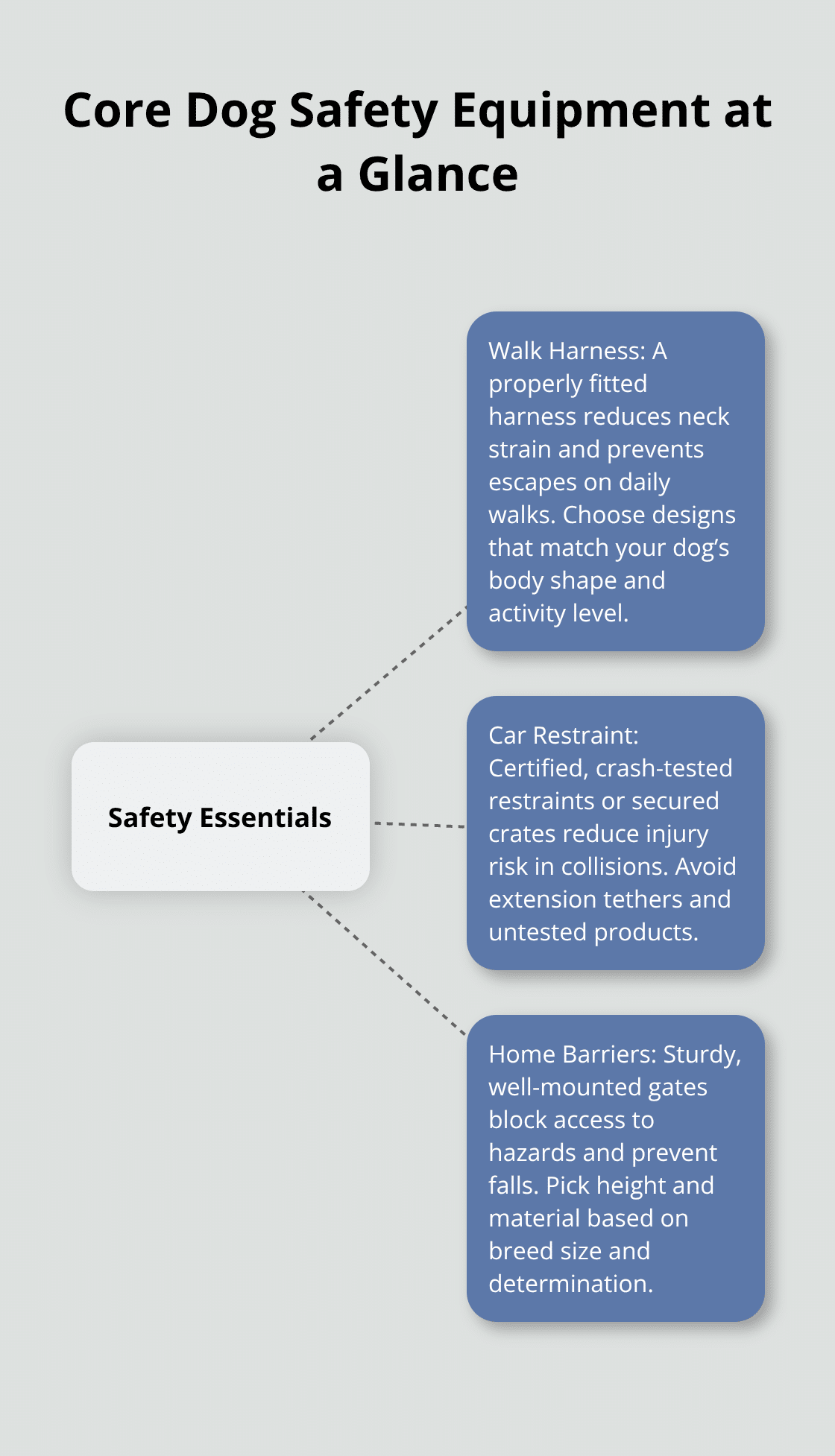
Every dog owner needs three essential pieces of dog safety equipment: a properly fitted harness for walks, crash-tested car restraints, and sturdy home barriers. These items prevent the majority of preventable injuries that send dogs to emergency veterinary clinics. Smart choices match equipment to your dog’s physical characteristics and activity level rather than follow trends or price points.
Brachycephalic breeds require harnesses exclusively, while high-energy dogs need reinforced materials that withstand daily stress. Weight and chest measurements determine proper size more accurately than breed generalizations (which often mislead owners about actual equipment needs). Quality equipment costs more upfront but prevents expensive emergency treatments and frequent replacements.
The Center for Pet Safety’s crash test data proves that most budget car restraints fail during accidents, which makes certified products worth their premium price. For more information on choosing the right dog safety equipment, visit Here
Image Credit: www.dogingtonpost.com