

 All products
Introduction to Dog Obedience Training
Dog training success relies heavily on having the right equipment. At DogingtonPost, we’ve found that quality tools make all the difference between a frustrating experience and significant progress. This guide will cover the essential dog obedience utility articles every trainer needs, from collars and leashes to treats and toys, and explain why they’re crucial for effective training.
Dog Training Collars and Leashes
Choosing the Right Collar for Your Dog’s Age
Starting with the wrong collar can derail training before it even begins. For puppies under sixteen weeks old, flat collars are the best option because they’re gentle on developing necks and allow for foundation work without unnecessary pressure. As your dog grows and masters basic commands like sits and recalls, a martingale collar becomes valuable for dogs with narrow heads or those prone to slipping. Martingales apply gentle pressure around the neck when the dog pulls, providing feedback without choking.
For serious obedience work, particularly targeting AKC Utility tests, many handlers prefer limited-slip collars that offer more control during precision exercises. The American Kennel Club doesn’t restrict collar types in Utility competition, but handlers consistently report better results with collars that provide clear communication without pain. It’s essential to avoid chain choke collars, as they can damage your dog’s trust and create unnecessary risks during training sessions.
Selecting the Right Leash Length
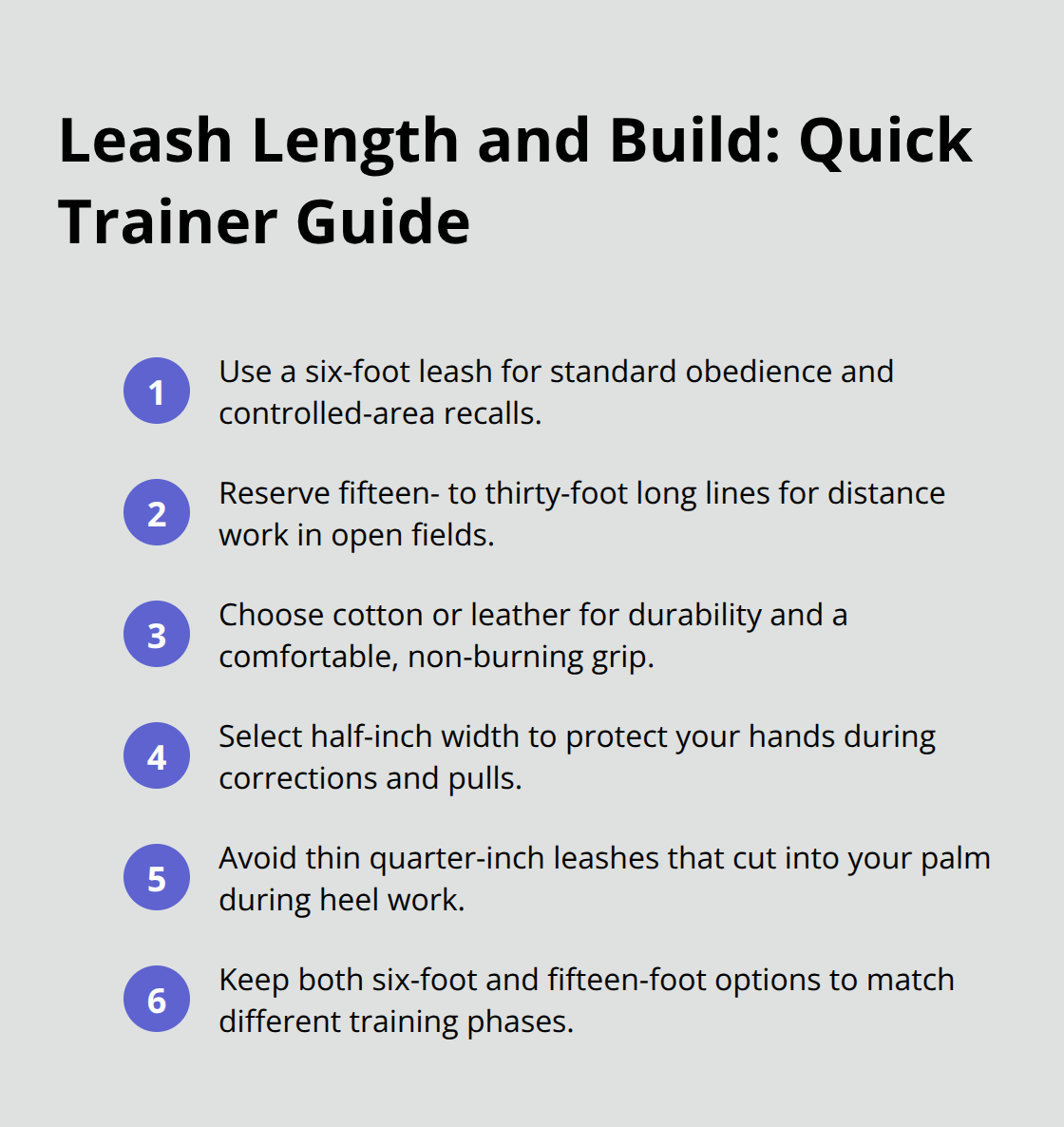
A six-foot leash is standard for obedience training because it provides enough length for your dog to move naturally while keeping you in control. Longer leashes, such as fifteen or thirty-footers, are best used in open fields for distance work or building a reliable recall in low-distraction environments. Cotton and leather leashes are more durable than nylon, with leather specifically developing a comfortable grip over time. The width of the leash also matters, with half-inch leashes distributing pressure evenly across your hand, while thin quarter-inch leashes can cut into your palm.
Ensuring Proper Fit
A collar that’s too loose can slip off during training, while one that’s too tight can restrict breathing and cause neck strain. The collar should allow two fingers to slide comfortably between the collar and your dog’s neck. It’s also crucial to check the fit weekly, as puppies grow rapidly, and adult dogs can gain weight seasonally. Inspecting leather collars monthly for cracks or deterioration and replacing any leash showing fraying, tears, or weak stitching immediately is also vital for safety and effectiveness.
Training Treats and Reward Systems
High-Value Treats for Effective Training
High-value treats are essential for obedience work. Soft, smelly treats work better than hard kibble because they can be consumed quickly, allowing for rapid repetition during training drills. Freeze-dried liver, chicken, and beef treats deliver intense smell that captures attention even in distracting environments. The size of the treats matters, with pea-sized or smaller treats recommended to keep your dog focused on the command rather than chewing.
Avoiding Treats That Disrupt Training
It’s crucial to choose healthy, dog-safe treats and avoid those that can disrupt training or health. Tracking treat spending is also important, as serious obedience competitors can spend between thirty and sixty dollars monthly on training treats alone. This investment pays off through faster learning and consistent performance.
Clicker Training for Instant Feedback
Clicker training tools accelerate learning by marking the exact moment your dog performs correctly. The clicker sound is consistent and distinct from your voice, allowing your dog to learn faster. Starting clicker training during foundation work with Sit and Recall teaches your dog that the click means a treat arrives within one second.
Treat Pouches and Feeding Adjustments
Treat pouches keep treats accessible, allowing you to click and reward within the critical one-second window. Reducing your dog’s regular meal portions by approximately fifteen to twenty percent on heavy training days is also recommended to prevent excessive weight gain.

Training Toys for Building Obedience Skills
Fetch Toys for Engagement and Drive
Fetch toys serve a dual purpose in obedience training, maintaining your dog’s drive and engagement between treat-based repetitions. Fetch toys from RuffWear and KONG are durable and can survive hundreds of throws without falling apart.
Puzzle Toys for Mental Resilience
Puzzle toys force your dog to problem-solve independently, strengthening mental resilience. Rotating puzzle toys into training days at a ratio of one puzzle session per three precision training days can help build confidence in independent decision-making.
Tug Toys for Controlled Intensity
Tug toys build bond intensity and jaw strength, translating directly to solid article retrieval. Controlled tug sessions establish handler leadership without aggression, creating a dog that respects your authority while maintaining confidence.

Conclusion
Image Credit: www.dogingtonpost.com