

 All products

India’s Gig Workers Gain Legal Status, But Social Security Remains Elusive
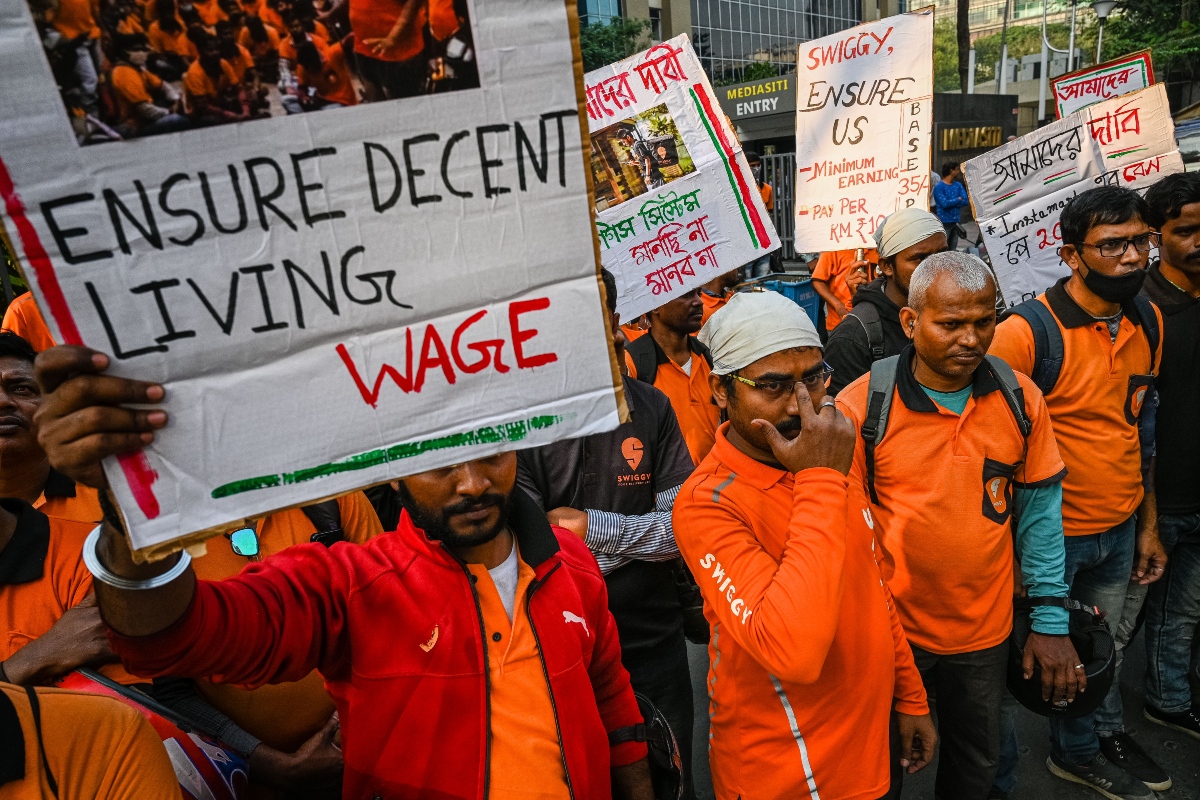
India has taken a significant step towards recognizing the rights of its vast gig and platform workforce by granting them legal status under its newly implemented labor laws. This move is expected to benefit millions of workers in the delivery, ride-hailing, and e-commerce sectors. However, despite this milestone, access to social security remains a distant reality for many, with benefits still unclear and platforms assessing their obligations.
The Code on Social Security, one of four labor laws that came into effect, aims to provide a legal framework for gig workers to access schemes such as the Employees’ State Insurance, provident fund, and government-backed insurance. The law requires aggregators, including food-delivery and ride-hailing platforms, to contribute 1-2% of their annual revenue to a government-managed social security fund. However, the details of the benefits, including eligibility, contribution levels, and delivery mechanisms, remain unclear.
Gig Economy in India: A Growing Sector
India has one of the world’s largest and fastest-growing gig economies, with over 12 million people working in the sector. The industry is projected to expand further as companies scale logistics, retail, and hyperlocal delivery. Major players like Amazon, Flipkart, Swiggy, and Ola rely on gig workers to run their businesses in the country. Despite their crucial role, most gig workers operate outside traditional labor protections and lack access to basic social security.
Challenges in Implementing the New Law
The implementation of the Code on Social Security faces several challenges, including the creation of Social Security Boards at the central and state levels. These boards will be responsible for designing and overseeing welfare schemes for gig and platform workers. However, there is little clarity on how decisions will be made, how much influence worker representatives will have, and who will control funding and benefit delivery.
Another significant challenge is the registration of gig workers on the Indian government’s E-Shram portal, which is a national database of unorganized workers. The portal has registered over 300,000 platform workers, but the government estimates that there are around 10 million gig workers in the country. Trade unions are working to help gig workers enroll, but the process is time-consuming and may result in lost wages for workers.
Conclusion
The new labor laws in India mark a significant step towards recognizing the rights of gig and platform workers. However, the implementation of the Code on Social Security faces several challenges, including the creation of Social Security Boards and the registration of gig workers on the E-Shram portal. While the law has the right intent, its effectiveness will depend on the government’s ability to address the concerns of gig workers and provide them with access to social security. For more information, read the full article Here
Image Credit: techcrunch.com